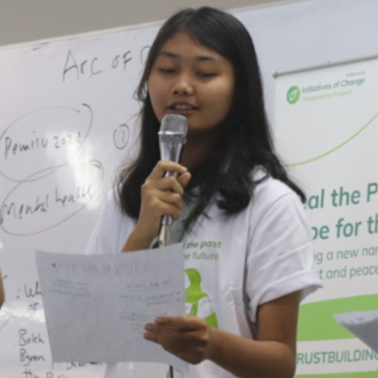
Cayes, a Montessori teacher from Yogyakarta, dedicated herself to fostering peace among her students. She believed in creating harmony, yet within her, there were unresolved struggles. Her journey toward healing and growth took a transformative turn when she joined the Trustbuilding Program (TBP) Indonesia.
It became one of her most cherished faith experiences. Growing up in a non-religious but inclusive environment, Cayes was taught that all religions hold truth. Her family prioritized kindness over rituals, and church activities were not a central part of their lives. This upbringing led her to be tolerant but left her unsure about her own faith. Over the years, various painful experiences deepened this uncertainty.
In high school, Cayes was falsely accused of insulting another religion on Facebook by her other religion teacher, an incident that left a lasting scar. Her family was criticized for alleged proselytizing/ Christianization when their church assisted Yogyakarta earthquake victims in 2006. Additionally, friends teased her about her faith, making her hesitant to embrace it openly. Even within her church, she faced judgment. As a child lector, her nervous mistakes during a reading were ridiculed, leading her to withdraw from church activities altogether. These events eroded her confidence, causing her to distance herself from prayer and church.
Joining TBP marked a turning point. Cayes discovered that beneath her calm exterior lay deep-seated wounds. Through TBP’s activities, she began a journey of self-discovery and healing. Inner listening sessions were particularly impactful. For the first time, Cayes confronted her pain and acknowledged its existence. Though the process wasn’t perfect, she committed to daily inner listening, learning to accept her vulnerabilities instead of making them with strength.
The timeline of historical wounds helped her recognize how long-standing and unacknowledged these pains were. Even incidents involving distant acquaintances had left lasting imprints. Participating in fishbowl exercises allowed her to articulate and embrace her wounds, creating a moment of catharsis and self-acceptance. Cayes also enjoyed interactive games like Friends for Life which provided fresh perspectives and deepened her understanding of others’ experiences.
After completing TBP, Cayes experienced significant personal growth. She became more confident and started trusting others more readily. Conversations about religion no longer felt threatening but became opportunities for connection. She re-engaged with her church, becoming a member of the Parish Pastoral Council (DPP) for lectors. This role symbolized her resolve to break the cycle of hurt she had once experienced, ensuring others wouldn’t feel discouraged from serving their faith.
In her professional and personal life, Cayes became more attuned to others’ emotional wounds, striving to minimize harm and foster understanding. She embraced love and honesty as guiding principles, teaching her students to be authentic and true to themselves. Tools like Friends for Life became part of her efforts to connect with and support those around her.
Cayes also grew more open to interfaith dialogue, participating actively in discussions and events. This openness enriched her faith, allowing it to flourish. While challenges remain - including the difficulty of creating safe spaces for herself and others - Cayes continues striving for growth. She acknowledges the ongoing journey of processing and forgiving past wounds but remains committed to her path.